Desert Point Lombok: Guide to Indonesia's Best Left-Hander
Take Your Surfing to the Next Level
Our experienced surf guides and coaches can help you find the best waves and improve your technique.
The Legend at the End of the Road
The road to Bangko-Bangko gives up pretending to be a road about forty minutes before arrival. What remains is a track – sometimes dirt, sometimes rock, sometimes educated guesses about which rut will swallow the motorbike least aggressively. Hands cramp from gripping handlebars. Dust coats skin in ochre layers.
Then the track crests a final hill. The ocean appears below. And none of the discomfort matters anymore.
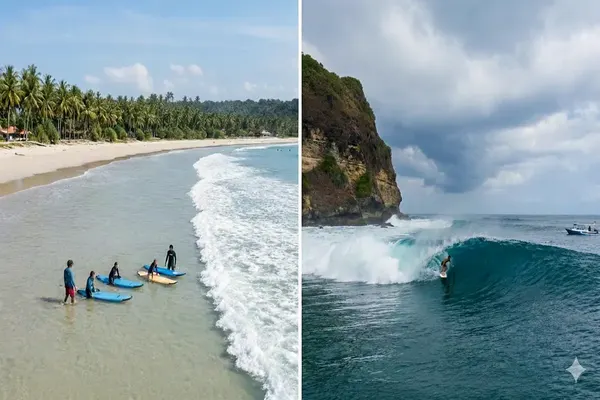
Desert Point spreads out in afternoon light – a headland jutting into azure water, waves peeling along its reef with mechanical precision. Even from the clifftop, the barrels are visible: forming, spitting, repeating in sequence down the line. This is the crown jewel among Lombok's best surf spots.
The stories precede every surfer's first visit. Desert Point: where rides can last 200 meters, where barrels spit for so long lungs burn before exit, where careers have been defined by single sessions. The wave has earned its legendary status. Planning your visit? Check our Kuta Lombok travel guide for logistics.
Understanding the Wave
Desert Point isn't complicated – it's a left-hand reef break wrapping around a headland, breaking over shallow coral that shapes swell into long, hollow cylinders. What makes it legendary isn't technical complexity; it's perfection of execution when conditions align.
The wave starts wide and slow, allowing even intermediate surfers a chance on smaller days. But as it refracts around the point, it accelerates, stands up, and throws. The barrel section can last impossibly long – ten seconds, fifteen, twenty on the biggest days. Surfers have emerged from tubes unable to process how long they'd been inside.
The reef adds consequence. Desert Point breaks over coral, much of it shallow, some of it sharp. Wipeouts don't resolve in deep water – they resolve on reef. The injury stories are legendary too, warnings passed between surfers who've witnessed what happens when things go wrong.
When It Works
Desert Point doesn't break every day. It doesn't break most days. The wave requires specific factor alignment that happens perhaps thirty times per year.
Swell needs to come from the southwest, with enough size to wrap into the bay but not so much that the wave closes out. The ideal range sits between five and ten feet on face.
Wind needs to blow offshore – from land toward sea, grooming wave faces into clean walls. During dry season, southeast trade winds typically cooperate, which is why Desert Point's season runs May through October.
Tide needs to be right. Too high and the wave loses shape. Too low and the reef becomes dangerously exposed. The sweet spot falls around mid-tide, with dropping tide often producing best sessions.
Check forecasts obsessively before making the trek. Consider hiring a surf guide who knows when Desert Point is working.
The Journey
From Kuta Lombok, the drive takes approximately two and a half to three hours under normal conditions. The route heads west along the south coast, through small villages, before the final stretch deteriorates significantly. Plan your trip around the best time to visit for optimal conditions.
During wet season, the road can wash out entirely. Checking current conditions before departing prevents wasted trips. A local surf guide can advise on road conditions and whether the wave is working.
Most surfers stay at least one night in Bangko-Bangko. Accommodation is basic – bamboo bungalows without hot water or reliable electricity. No restaurants in the Western sense; local families cook meals for surfers who've made the pilgrimage. The experience is the opposite of a surf camp – raw and authentic.
This remoteness filters for commitment. Desert Point isn't a resort amenity – it's a camping situation at a fishing village's edge for the chance to ride one specific wave.
In the Water
Paddling out at Desert Point triggers specific anticipation. The takeoff zone sits about fifty meters from shore, accessible through a channel that shifts with sand movement.
The lineup develops its own social dynamics. On good days, crowds might reach thirty surfers – significant for a remote break with one defined takeoff. Locals, mostly visiting Balinese and Javanese surfers, know the wave intimately.
Respect is non-negotiable. No one paddles out and starts snagging sets. Watching, waiting, taking waves that come without priority conflicts – this isn't just etiquette, it's safety. Dropping in on someone in a Desert Point barrel endangers everyone involved.
The wave itself humbles quickly. Waves that looked manageable from the cliff reveal their power at water level. The reef passes underneath, disturbingly visible through clear water. Sets approach with building intensity.
And then, if positioning is correct and timing right and commitment holds, it's happening – dropping into a Desert Point wave, speed surprising, wall stretching impossibly long, barrel starting to throw before readiness arrives.
Safety Requirements
Desert Point demands more preparation than typical destinations.
Bring comprehensive first aid including antiseptic and bandages for reef cuts. Medical facilities are minimal; anything serious requires hours of driving back toward civilization.
Travel insurance covering surf injuries isn't optional – it's essential.
Surf with others, never alone. The lineup functions as mutual safety net. A solo surfer who disappears into a set might not be noticed for a dangerously long time.
Know limits and respect them. Desert Point at solid six feet differs entirely from Desert Point at three feet. The wave will be there when readiness arrives.
Respect the reef. The coral is both beautiful and endangered. Don't walk on it, don't break pieces, don't leave trash anywhere.
Why It Matters
There are many waves in Indonesia – more accessible, more consistent, more appropriate for more surfers. Why does Desert Point hold the status it does? Compare it to Gerupuk's accessible variety to understand the trade-offs.
The answer lies in potential. On its best days, Desert Point produces waves that rival anywhere on earth. The combination of length, power, and barrel formation creates a canvas few spots can match. For experienced surfers, it's a bucket-list destination.
That potential draws surfers despite challenges – terrible road, basic accommodation, fickle conditions, crowded lineup, reef that punishes mistakes. They accept it all for the chance to experience the wave at its best. First-timers should build skills at Selong Belanak or Gerupuk before attempting Desert Point.
The road will always be terrible. The accommodations will stay basic. The wave, when it breaks, will remain one of the best on earth. Lombok vs Bali comparisons always mention Desert Point as Lombok's trump card.
Some things are worth the journey.
Looking for other Lombok surf adventures? Explore all the best surf spots in Lombok or join an Ekas Day Trip for an easier excursion.
Frequently Asked Questions
Take Your Surfing to the Next Level
Our experienced surf guides and coaches can help you find the best waves and improve your technique.
Book a Surf Guide